Photo courtesy of the Robert Axle Project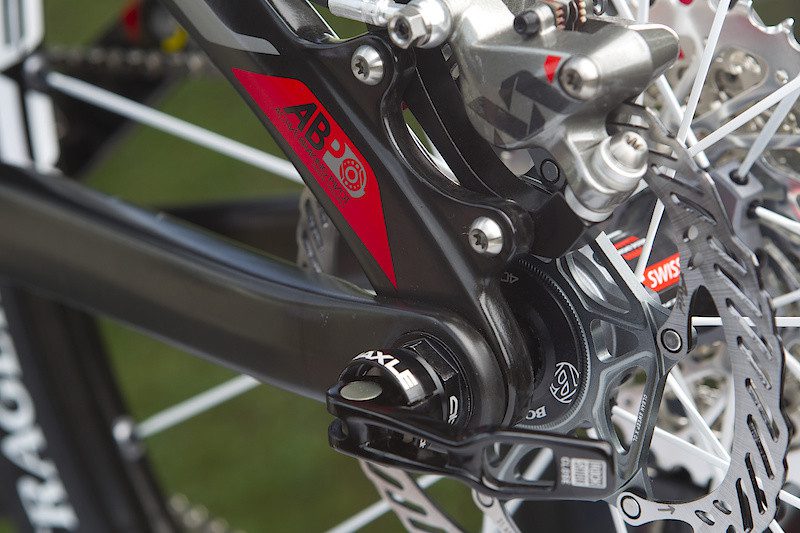
Disc brakes: do ya need ’em? No, you don’t. Are they nice? Oh yes, they are. How nice? It depends on the brakes, where you ride, and what kind of riding you do. Here are the pros and cons to having decent disc brakes. Pros–both the brake pad and the rotor are smaller, more compact, and less exposed to the elements (no more squeezing the brakes on a muddy downhill ride to have pretty much nothing happen); the brake pads tend to last longer than conventional caliper brakes; and on a long and/or steep descent, you don’t need to cramp your hands by squeezing hard (this last one is particularly true for hydraulic disc brakes). Cons–to have disc brakes you really need to have a bike frame that is built for mounting them on; if you’re a stickler on weight, they tend to be heavier; maintaining them is a little more involved; and of course they’re more expensive.
Disc brakes are very nice (not exactly a must, but close) for mountain bikers, riders in the Pacific NW, or anyone that encounters water/mud with any frequency. Pavement riders who basically stick to dry weather and fairly flat roads probably aren’t going to notice much if any difference.
Wheels: for road bikes, 700c (meaning 700 mm diameter; the “c” is a long story) is pretty much the standard size. For mountain bikes 26-inch diameter wheels are standard. But in recent years mountain bikes with 29-inch wheels (called 29ers) have become popular. So have 27.5-inch wheels. Both of these come in a variety of thicknesses…the ones that mount the thickest (widest) tires require disc brakes, a special frame, and are commonly called “fat bikes”. For road bikes, the 650b wheel size (650 mm diameter, which turns out to be the same as 27.5″) with thicker tires has become popular. As you might guess, these non-standard wheel sizes are more expensive than the standard, although they have become more affordable as supply and selection have increased in the last few years. These have their advantages, which include (among other things) increased comfort on the ride, ability to simply roll over some obstacles rather than swerve or hop them, and lower tire air pressure which (in theory) means fewer flats.
Gears: For decades the standard for people who wanted a nice gear range was two or three chain rings up front, and 8 to 11 cogs on the back wheel. Now there are a variety of choices including 1 x 11 gearing (one chain ring and 11 cogs in a wide spectrum of sizes), and internal hubs where all the gears are inside the back hub and you never see them. Internal hubs, although they can work with a chain drive, are often used in conjunction with a carbon belt drive rather than a chain. Carbon belts can have their problems but they never need any grease…no more chain grease stains on your pants, socks, or (God forbid) legs. Many chain purists are proud of their “chain ring tattoos” on their calves and wouldn’t be caught dead on a carbon belt bike, but I own one such bike and I really like it for my commute and shorter rides.
Just like anything else, there is a price to be paid for anything that is relatively non-standard…the price is often increased maintenance, in addition to higher up-front cost. For people just starting out, my advice is to start with something standard and relatively inexpensive. As you get more into (if you get more into) biking, you can always upgrade to non-standard equipment…you will almost certainly upgrade anyway. By then, you’ll have a better idea of what specific riding you’re into, and what you are looking for in your next bike. And if you decide to not bike or to just remain a casual rider, you haven’t needlessly dropped a bunch of money on things that don’t really make a difference to you.
Finally, the age-old debate: are things like kickstands, cup holders, and handlebar streamers acceptable for “serious” cyclists? First, if you have ever referred to yourself as a “serious” cyclist, unless you are a professional chances are I don’t want to know you. I don’t want to be serious about anything except my job, which cycling is most definitely not. Second, cycling should be fun; why else would you do it? And if any kind of accessory increases the fun that you’ll have, then why not put it on your bike? I personally don’t like kickstands and have removed them from my few bikes that came with them attached, but if you think it’s worthwhile to have one, then who am I to judge? Same goes for everything else. Make your bike truly yours, maximize your enjoyment, and don’t worry about what anyone thinks about it. Have fun!
 Bike Newbie