The Neurocycle: Day 9 of 63

Social Animals

This will surprise absolutely no one, but having a network of good friends is highly beneficial to our health and well-being. What some people may not know (I didn’t) is just how measurable the benefits can be.

A lot of studies have been done on the length of cellular-level structures in our body called telomeres. These are the “endcaps” of our chromosome strands in the cells, protecting them from damage, the way the little plastic cap on your shoelace keeps it from fraying. While longer telomeres aren’t always the best things to have (studies have correlated long telomeres with some kinds of cancer, for example), in general long telomeres keep the aging process at bay, lowering the risk of degenerative diseases such as heart disease and dementia. This is oversimplifying things by quite a bit, but having long telomeres is good if you want a long and healthy life.

A number of factors influence telomere length. It turns out about a third of these factors are genetic in nature, something we as individuals can’t control. But a large portion of factors are environmental, something we do have some degree of control over. One of those environmental factors is having a network of friends. Studies have shown individuals reporting stable, supportive social networks to have significantly longer telomeres than people living in relative isolation. Whether or not actual physical contact with friends is a necessary component, I did not find any information on.

The question one might ask in learning this is, “How do I go about obtaining a good friendship network?” Well, I am probably not the best person to ask, as my friends while solid are few in number. But one thing I have learned is that to have good friends, one must be a good friend…this requires time, energy and patience, but can have enormous rewards. It turns out one of the rewards may be a longer, healthier life.

Here endeth the lesson on friends and telomeres for social animals such as we.

The Neurocycle: Day 8 of 63

My Favorite Fictional Character?

To help prepare for some planned writing, I read The Science of Storytelling by Will Storr. I highly recommend it to anyone who tells or wants to tell stories, no matter the medium.

One of the biggest lessons in the book for me is that the reality we experience as humans is not at all the objective tape-recording I’ve always imagined it to be. Instead, it’s a highly subjective narrative construct, creatively assembled by each of our brains, in which we are each the hero of our story. Regardless of cultural or societal differences, each of our brains does this, and all our reality-stories are incredibly similar. This is why every human culture is based upon narratives, and these narratives have massive parallels despite distances in time and space from each other.

The reasons why aren’t exactly clear to me, but I suppose this is a shared biological trait that helps humans to make sense of the huge amount of sensory data we gather, and more importantly to communicate abstract ideas to each other using a common base reality.

The cold hard scientific fact that the world I’ve witnessed all my life, including me as part of it, is different from what exists in actuality, has three major implications. The bummer one is that I am not the heroic character I see myself to be. On the brighter side, the uplifting one is that some others are probably not the arch villains I see them to be; also, my shortcomings and flaws are probably not as glaring or fatal to me as they seem. My brain has exaggerated these things to “fit” the story it has invented.

Another uplifting fact that gives me hope is that people not only love a good story, they need a good story universally. As an amateur storyteller this means I have an audience wherever I go!

Here endeth the lesson on our “fake” realities.

The Neurocycle: Day 7 of 63

The Blessing of Being Challenged

I just read a biography of Isaac Newton, who was born into the English Civil War and lived through the Plague in the 1660s. It’s no wonder he loved to study motion and change, because in his young life the world was in constant flux.

Undeniably his curiosity, creativity and unique intellect were the basis of his groundbreaking scientific work. But it’s the meticulous mathematical proofing of his theories, which he found himself compelled to do after older and more established scientists scoffed at his ideas, that make Newton’s laws the basis of our understanding of nature today.

Despite his genius, Newton was in his person not so very different from you or I. He did not appreciate his critics, and hated his rivals. When someone would publicly denounce one of his works as unproven and unfounded, his usual response was to despair and sulk for a while, a few weeks to several months at a time. Then he would work feverishly, driven by revenge on his challengers, to complete the mathematical proofs of what he had published. The results were not completely unassailable, but certainly ironclad, to the point where almost 400 years later they are still taught to schoolchildren worldwide.

What would our modern body of scientific understanding look like today, had Newton not been pushed and embarrassed initially by his detractors? It’s hard to say, but it would certainly be different from what we know and what inspired Einstein, Hawking and others. In summary: Being challenged and lambasted sucks at the time, but it often provides the push we need to get ourselves from good to great. We should thank those who question our work and call out flaws in it, instead of letting them get to us personally.

Here endeth the lesson on being shoved.

The Neurocycle: Day 6 of 63

X-Spec-Tations

Expectations are funny things. When they are met or exceeded, we dismiss it all and say “Well, that’s the way it SHOULD be, so no big deal.” But when they aren’t met and we are disappointed, we have a meltdown or spiral down into negativity…we point fingers or feel shame or quit in disgust or all of the above…in a word, our day is ruined.

I wonder why we don’t seem to celebrate the good things as excessively as we bemoan the bad things? My theory is it has something to do with survival…the early humans who focused on not dying by fixing negative things lived long enough to reproduce successfully…those who dwelled on the fact that they managed to live another day and didn’t immediately get to work on building shelter for the coming storm, not so much.

But however it might have happened, we all tend to be pessimists and in our modern lifestyle it is now killing us rather than ensuring our survival. Study after study has shown that people who have short memories about negative events, and who dwell on celebrating positive events, are happier, healthier, more successful, and longer-lived. Don’t get me wrong…identifying and fixing problems is still critically important to a good life…but maybe we don’t need to turn into drama queens and lose all composure every time it rains when the forecast promised sun.

For me, I plan to make a point of flipping the script on expectations. When they’re met or exceeded I will pump my fist and yell a big victory whoop. When they aren’t, I will try to shrug and move on…fix what is fixable, but move on without drama.

Here endeth the lesson on unmet expectations.

The Neurocycle: Day 5 of 63

Deep Tissue Massage

As recently as 10 years ago, I would not have had much to say about deep tissue massage. I’m not really into being touched (I’m not a hugger), so naturally I have avoided massage of any kind for most of my life. And, being a dude, I didn’t feel a need to be pelted with jokes from my fellow dudes upon hearing I’d gotten a massage (“did you get a happy ending?” HAR HAR HAR), so I was effectively scared away from it by peer pressure.

After a snowboarding accident, I visited a Licensed Massage Therapist at the urging of my then-girlfriend, now-wife. It opened my eyes to the benefits of deep tissue massage and I began to realize stereotypes aren’t necessarily true.

I am naturally ticklish, but receiving a deep tissue massage doesn’t “bother” the nerve sensors at the skin’s surface, so no problem there. Instead, it uses pressure on the muscles and tendons below the skin (applied by the therapist’s hands or elbows against your bones, typically) to stimulate movement of fluids (blood, lymph, etc.) and put things back in place regarding your joints, muscles and bones. This accelerates the flushing of toxins out of your system, kickstarts your body’s natural self-healing processes, and undoes the everyday trauma of our spine-compressing, muscle-tensing lifestyles.

Unlike what you might see on movies or TV when a person is getting massaged, DTM is not soothing, unless you happen to find the act of getting physically beaten in super-slow-motion to be soothing. For me it’s much the opposite. But I sing DTM’s praises anyway because it tends to get things moving and my body responds, initially with pain, but over the following days with better posture, less pain than before, and a more positive outlook. For someone like me who spends much of my day sitting in a chair, the days following a DTM are a wonderful break from my normal hunched, compressed self. I’m not exaggerating when I say I often walk out of a DTM session about an inch taller than when I walked in.

Also, when I receive a DTM I tend to experience some kind of epiphany of personal truth. Maybe it’s the improved flow to my brain from the circulatory and nervous systems. Maybe it’s because I do controlled deep breathing during the DTM to get past the initial pain/trauma/awkwardness of getting slo-mo beat up by a stranger. Maybe it’s because it’s a rare opportunity to be still and quiet but not asleep for an hour and just focus inward. Or maybe it’s a combination of these things.

Whatever it is, I get more out of a good DTM then I ever have from any pill, drink, or doctor’s office visit. Once I find a good Licensed Massage Therapist near my home, I hope to go in for a DTM 2-3 times a month.

Here endeth the lesson on deep tissue massage.

The Neurocycle: Day 4 of 63

Constellations of People

Most people who are in business would agree that personal networking is good. In fact, most people period would agree having a personal network is good. One method that has been identified for building and maintaining a network is called Gather, Ask, Do.

The Gather part is simple, but breaking the ice is usually the hardest part of getting to know people, especially brand new people. It’s helpful to have established goals and be intentional about building your personal network. It’s helpful to have an “in” such as a mutual acquaintance or mutual interest. It also helps to ask people questions about themselves (and other things they like talking about, if you happen to know what those things are). When they answer, listen; don’t just wait to talk more.

The Ask part is about getting to know someone better. The best way to do this is to ask them, “How can I help?” When making a connection is totally self-serving, it’s usually obvious to the other person and puts a bad taste in their mouth…making it about them rather than you is the key to forming a deeper connection.

For the times you want or need to ask someone for a favor, make the favor specific, make it measurable, and make it time-bound. People are a lot more likely to do you a favor when they know the limits of the favor and that it won’t lead them down an endless, impossible trail of favors. Asking someone you don’t or barely know for a favor is tough, but it also can forge a much deeper and meaningful connection with people.

Finally, the Do part is about putting the work in to cement and maintain a relationship. Follow up with people. After you have that first substantial conversation, send that person a note thanking them for their time…if the note is handwritten that’s even better…when you thank people they feel good and they remember you. If you helped them with something, follow up later and ask them how it turned out. If they helped you with something, thank them, of course. In these ways, a set of almost random people can become a fulfilling group with meaning. It takes practice and the payoff isn’t usually immediate, but if you’re willing to put the time/effort in you’ll eventually see the dividends.

Here endeth the lesson on networking.

The Neurocycle: Day 3 of 63

Waiting to React

When I think back on some of the best days in my life, and some of the worst, there is a common theme running through most of them, and that theme is the moment seems much more dramatic and urgent when I’m in it. Whether I’m disappointed, thrilled, saddened, elated, or frustrated, the emotion always fades to match the situation’s reality more accurately with time, sometimes as little as a few minutes later. With that being the case, it would make good sense for me to give myself time before acting or speaking in reaction to the situation.

There are times when the situation obviously calls for an instant reaction, such as a fire or other emergency. Luckily for me, those types of situations tend to be few and far between. In this post I’m talking about your everyday occurrences, or even not so everyday things like a job promotion or a busted headlamp or a windfall of money or the loss of a college friend. A helpful practice is to give yourself a little time to reflect and consider the occurrence from different angles, even to gather more information, before launching into a full-on verdict/judgment/sentencing.

The reason for this is simple. Good things are never quite as good as they seem at the time. This may sound pessimistic and bitter at first, but consider the flip side of that truth: that bad things are never as bad as they seem. Giving one’s self time to let the true nature of the situation reveal itself through the haze of strong emotions tends to avoid the mistakes of over-reacting or mis-reacting to it. This is why you’ll often hear people say things like “I’m going to sleep on it” or “Can you give me 48 hours?” before making a big decision.

The practice of mulling things over has, unfortunately, been diminished and discounted in our modern, instant-information, instant-gratification society. We need to remind ourselves that not everything demands an immediate judgment and reaction from us. Most of the time, it’s better to reflect on and consider a situation before coming to a final decision.

Here endeth the lesson on reacting to the events in our lives.

The Neurocycle: Day 2 of 63

A Healthy Brain Needs Healthy Fuel

It’s fall, which in North America means you can find a particular type of veggie really cheap. Squash.

Butternut squash is rich in carotenoids, vitamin A, B complex vitamins, vitamin C, vitamin E, magnesium, potassium, and manganese. It’s also a great source of fiber, calcium, iron, phosphorus, and copper. These add up to being one of the brain-healthiest foods in existence, helping to fight and protect against cancer, heart disease and Alzheimer’s among others.

Butternut squash is also super versatile, since it can be eaten raw or cooked in various ways. One of my favorites is to cube it, stir into the cubes a mix of coconut oil, cinnamon, nutmeg, rosemary and salt, spoon onto an oven tray and bake at 375 F for about 35-55 minutes, removing when the edges are browning. Easy. I don’t even remove the skin as I really don’t notice it when fully cooked. Make sure you spoon out the “guts” from the bulb end, though, since they are similar to pumpkin guts i.e. not very tasty.

Here endeth the lesson on butternut squash.

The Neurocycle: Day 1 of 63

No, this isn’t about a new kind of bicycle. It’s about a book by Dr. Caroline Leaf called Cleaning Up Your Mental Mess. In it, Dr. Leaf explains how it’s entirely possible for us to get away from bad mental habits such as pointless worrying, anxiety, negative self-talk etc. and get ourselves into healthy mental habits using a daily process that includes writing. Full disclosure: I did not read the full book but rather a condensed version via the Blinkist app, who has not paid me anything for the mention. (And I’m fine with that.)

The neurocycle process has five steps: 1. Gather (information), 2. Reflect (on said information), 3. Write (put into your own words what you’ve learned), 4. Recheck (edit what you’ve written), and 5. Active Reach (either put what you’ve written into practice or teach it to someone else). This blog will focus on steps 3 and 4.

Today, for me, it’s about cutting out the toxic ingredients in one’s life. Sometimes those ingredients are people. While people are far more complex than just categorizing them as toxic or non-toxic, sometimes a friendship or acquaintance-ship is pretty much entirely toxic in its limited context. Not always, but often, it is much more toxic to one party than to the other, or at least one party notices the toxicity much more than the other. My information is this: When there is little hope of the other party changing themselves, it becomes incumbent upon the one party to cut out the toxicity and perform what I call a friend-ectomy. This friend-ectomy must be real, it must be absolute, and it must be communicated especially to the Toxic Friend.

Depending on the exact people involved, the context of the friendship (friends they have in common, societal connections, etc.), the depth of the friendship and countless other factors, cutting out the toxicity can be anywhere from ridiculously easy to damn near impossible to accomplish. One important thing is to, as much as possible, avoid applying judgments or indictments to the friend-ectomy. This is easier said than done, since by the time an assessment of “toxic” has been made a lot of damage has often been done, usually to the assessing party but often to others as well. It can be tempting to blame and condemn the non-assessing party for emotional damage, feelings of guilt, and other negative outcomes. But that isn’t the most important thing…your health is. Rather than focus on assigning blame, mental and emotional energy should be applied to the friend-ectomy itself as the only viable solution to a toxic friendship and thus the only acceptable path forward.

A complicating factor almost always present is the group of friends the two parties have in common. In a friend-ectomy it can be tempting for both parties to “recruit” friends over to “their side”. Again, rather than focus on painting the other party as the bad guy, the effort should be applied toward helping mutual friends realize that (1) the friend-ectomy is necessary for human health and well-being, (2) no one is asking them to stop being friends with anyone, and (3) as friends, their respect for and support of the friend-ectomy decision is appreciated.

In 99 cases out of 100, only a complete friend-ectomy will actually solve the problem. That said, it can be possible for a friend-ectomy to be partial rather than complete, as long as all parties involved respect the boundaries. For example, a coworker who has also been a personal friend might become just a coworker. In cases such as the one just described, it could even be necessary to continue contact with the toxic person (unless you have the luxury of just quitting your job). But for this to be truly successful, everyone, including other coworkers/friends, must respect the new boundaries. A lapse back into the toxic relationship, even if temporary, can be harmful.

None of this is ever easy. Sometimes it’s hardest on the group of common friends who suddenly find themselves in the middle of a “battle” where they feel obligated to choose a side and remain loyal to it. But if you make up your mind that (1) your relationship with yourself, including your health, is top priority, (2) your relationship with Toxic Friend is jeopardizing that health, (3) your other friends (important: not friends you have in common with Toxic Friend) are there for you when you need to find support, and (4) you are more valuable as a good, healthy person than any other person insists your “friendship” is, you can successfully perform a friend-ectomy and there are many places online that can walk you through it. In a lot of ways this is part of a healthy lifestyle that includes, among other things, growth, love, and making new friends all the time.
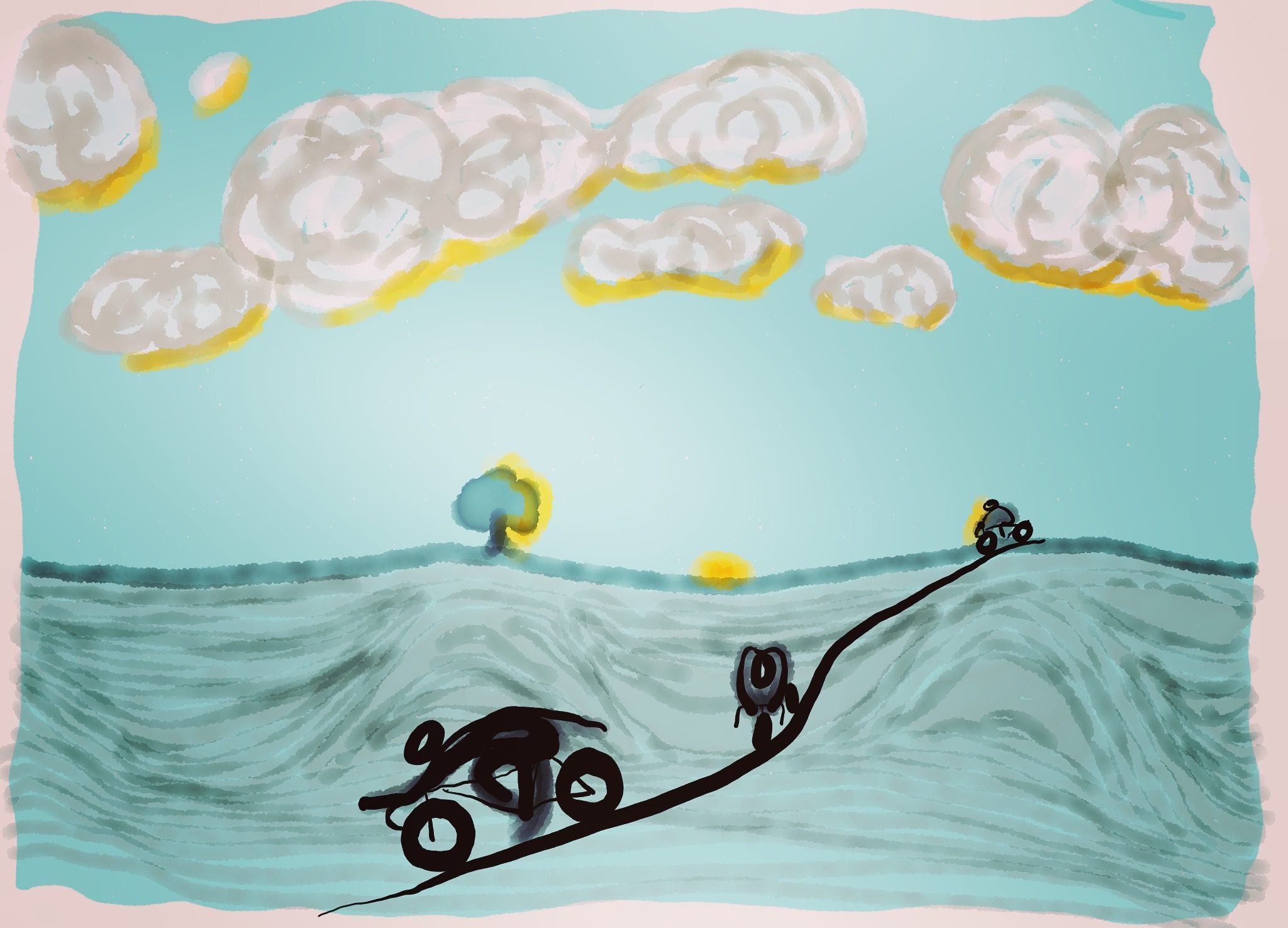
We voice our inner Dumbo all the time; let’s give Timothy a voice too

The problems in our lives can dominate and define us, if we let them. Some problems are truly serious and perplexing; others, while perhaps less serious, are still draining and distracting. I have read many self-care articles recommending compassionate inner talk, and I’ve tried it, and it definitely works for making myself feel better. Beyond that, though, an inner voice can be not only compassionate and empathetic but pragmatic and encouraging as well…a sort of cheerleading MacGuyver with the ability to rise above the seemingly inescapable troubles and trials of our lives. I’ve tried this style of “compassion-plus” inner talk and for me it has worked even better than self-compassion alone.

Since I grew up on movies from a certain studio known for its feature-length family films, I’m going to use an old one (Dumbo) for context as it was the first story that came to me, although I’m sure there are other (and better) popular culture paradigms out there. If you haven’t seen the animated movie, I recommend it even for those without children…beyond being entertaining it’s a great metaphor for how we all feel at least part of the time, i.e. alone, outcast, defective, and powerless to improve our situation.

In the movie, the title character, a baby circus elephant, wants only two things in life: love and acceptance, both of which he gets unconditionally and without limit from his mother. Not much of a problem there! But he is cursed (he believes) with oversized ears, which (he believes) cause many of the animals to reject and torment him. Then the unthinkable happens…his mother is taken from him and he is left alone (he believes) in a hopeless situation (he believes).

The part of the movie that intrigues me is Dumbo’s friendship with a mouse named Timothy…this was clearly meant to be a humorous play on the old wives’ tale that elephants are typically afraid of mice. But Dumbo, being a friendless, worthless, hopeless circus reject (he believes), cannot afford the luxury of being choosy when it comes to friends. Timothy takes pity on Dumbo (anyone with half a heart would!), but more than that, actually likes and values him as an equal. Timothy is very compassionate, but also upbeat, encouraging, practical, and inventive, making him the perfect match for Dumbo who is pessimistic, full of fear, and has zero self-confidence.

But what the movie doesn’t come out and say to your face is that, while Timothy has all the personality attributes and character necessary for success (Dumbo having pretty much none), all the raw strength, talent, and appeal are in Dumbo, not Timothy. Timothy’s great contribution is simply that he opens Dumbo’s eyes and gently helps him to see a number of truths that his negative self-talk had made him blind to: (1) he is a valuable friend and member of the circus community, (2) the big ears are not a curse or defect but are instead his greatest attribute giving him the ability to “fly”, (3) he can and will be loved by many, and deservedly so, (4) all the hater animals (who don’t actually hate his ears but are hardwired to ease their own shame by tormenting others) have no power against him as long as he doesn’t empower them by buying into their negativity, and perhaps most important (5) he already possesses all the power and ability to improve his own situation even beyond what he previously thought possible. It’s a simple contribution but a critical one, because without it, Dumbo merely continues to mope and lament his condition, and then we’d end up with a very sad story indeed.

So, the next time you “hear” your inner Dumbo’s laments (I know I hear mine several times daily, over various things), you might see if you can summon an inner Timothy to answer and give advice…or maybe you just picture Timothy patiently listening…sometimes that’s all that’s needed in the moment. Maybe all Timothy can muster right away is a vague platitude or two, which is also fine…in fact that happens to be what my inner Timothy is best at. Here are some of my favorite “starters” for Timothy.

  • When times are good, they aren’t quite as good as they seem, and when things are bad, they are really not nearly as bad as they seem at the time.
  • You are a lot stronger and more clever than you know.
  • The power to make you feel good or bad comes entirely from within.
  • Do one thing today for another person that you wish someone would do for you.
  • If someone does do something for you, treat them the way you want to be treated when you do nice things for others.
  • Find at least one thing to be thankful for every day.
  • If a thing doesn’t bother you, to the extent where you’re barely aware of it if no one else points it out, is it a problem?
  • Whether you think you can or think you can’t, you are correct.
  • Everyone else feels like Dumbo too, to some degree, some of the time. Everyone has problems and believes theirs are the worst.